
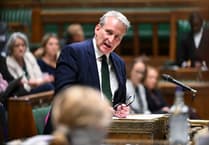
EAST Hampshire MP Damian Hinds has praised Chancellor George Osborne’s latest budget, despite the setbacks which have followed over the past fortnight.
Mr Hinds said the budget had to put the “needs of future generations first” and continue to “deliver economic security in the face of global economic headwinds”.
But he also responded to the controversy and consequential u-turns arising from disability benefit proposals, which saw former work and pensions secretary Iain Duncan Smith stand down.
Mr Duncan Smith said he resigned because he felt the latest planned changes to disability payments were “not defensible” in a budget benefitting higher-earning taxpayers.
 Youth joblessness rises as East Hampshire claimant numbers increase
 Man dies and several injured following three-car collision on A31 Alresford bypass
 Farnham-to-Paris ride raises £100,000 for hospice
 Tens of thousands of ultra low emission vehicles registered in Hampshire – as campaigners group call for more equal access across UK
“It is essential that as a compassionate society we give proper support to those who need it and this is especially true for people who are sick or have a disability,” said Mr Hinds.
“The support through disability benefits has rightly been going up, and was always planned to carry on going up, and the Government also has an ambition to halve the employment gap between people with disabilities and those without through initiatives like the Access to Work programme.
“The changes that were put forward on personal independence payments will not now go ahead.”
Labour leader Jeremy Corbyn and Liberal Democrat leader Tim Farron have both called for Mr Osborne to resign, describing an apparent “disarray” within the government.
Speaking generally about the budget, Mr Hinds said that many of the proposals are “only possible because our finances are in better shape to deal with threats still posed by volatility and a deteriorating global economic outlook”.
“The economy is growing and more robust because of the steps taken over the last six years, but the need to deliver sound public finances is still important, to balance the books and improve our national economic resilience,” he added.
“The emphasis is on long-term solutions to long-term problems, so we don’t put off difficult decisions and leave unnecessary burdens for the next generation. Acting now will provide more stability and more choice for the future.”
He went on to discuss “highlights from the budget”, including the introduction of a new lifetime ISA, enabling people under 40 to save up to £4,000 per year tax free with the government adding £1 for every £4 saved, up until the age of 50.
Another new programme, Help to Save, offers an even bigger proportionate top up of up to 50 per cent for low-income working households building up their rainy-day savings.
“I’m delighted that young people are now being given real encouragement and choice in how they save for their futures with the new lifetime ISA,” added Mr Hinds.
“Many are trying to save up deposits to buy a first property and this should make a difference in areas such as East Hampshire, where house prices are far above the national average.
“Young people now don’t have to choose between saving for retirement or for buying a home, because the lifetime ISA can do either. And helping lower-income families to start saving and create a cushion against life’s shocks, with the Help to Save product, can also help to prevent more people from tripping into rip-off debts.”
The announcement that the personal allowance will rise again to £11,500 from April 2017 will take an estimated 1,898 low earners across East Hampshire out of paying income tax altogether, as well as reducing income tax for another 50,078.
And, Mr Hinds added, the cut in taxes for small businesses will mean that 190,000 business properties across the South East will benefit from the business rates reduction package.
The freeze in fuel duty – for the sixth year in a row, and the longest such freeze for 40 years – is “particularly welcome in rural areas like East Hampshire”, helping small firms and households alike. Pubs also received “a boost” with the announcement that duty on beer, cider and spirits would also be frozen.
Commenting on how the Budget is likely to affect Alton’s business community, Alton Chamber of Commerce and Industry president Stephen Lewis said: “It is pleasing to see that many of our empty shops are beginning to be filled with new businesses, reflecting a national growth in new enterprises.
“Some of the retailers in smaller units will benefit from the greater business rates relief, but the living wage may well cancel out any gains they make.
“There are, of course, many more commercial businesses in Alton, and the cut in corporation tax should help when it comes, but the forecast lower growth rate of the UK economy, when combined with the same problems of increased staff costs, won’t be offering them much help.”
Comments
This article has no comments yet. Be the first to leave a comment.