
Bake, Natter and Roll Farnham WI
The members of Bake, Natter and Roll Farnham WI entered the world of crime scene investigation at their meeting on February 19, when the guest speaker was Hayley Scott, a former forensic practitioner working with the Metropolitan Police.
Hayley took members through the wide range of crime scenes she had attended in her 14 years working with the Met. During her investigations her evidence had been used to catch 12 murderers.
She took members through the way careful identification, retrieval and interpretation of forensic evidence - which includes fingerprints, finger marks and DNA - are all required to prove a case, and said she would, if necessary, go to court to give her evidence.




Members were surprised to learn there are nine fingerprint patterns and fingerprints are unique - even identical twins have different prints - and some people do not have fingerprints.
After Hayley’s presentation and members refuelling on delicious cakes and bakes created by Arlette and Jules, members discussed Bake, Natter and Roll business, with updates from Gail about the curry club and Ali about the book group.
Members chatted about the formation of a theatre group, with Katie as the lead, and it looked as if it will be a very popular group.
Lauren Fridge will show Bake, Natter and Roll members how to spot signs of dementia when they meet in the Large Hall at the Spire Church in South Street, Farnham, on March 19 at 7.45pm. For more information email [email protected]
Alton Art Society
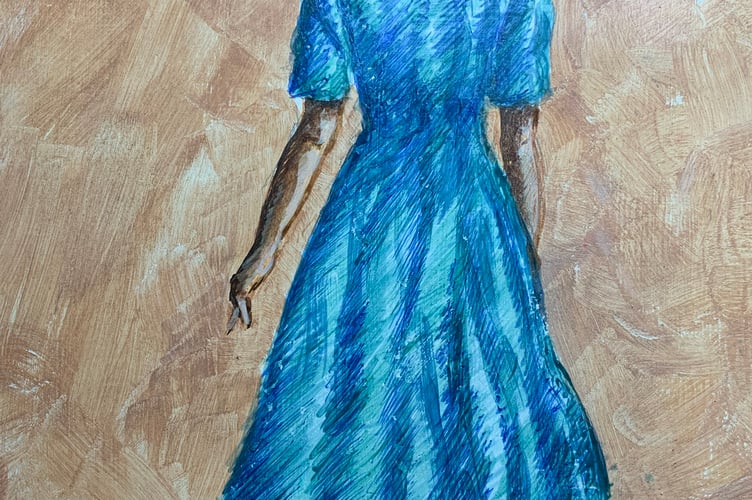
Members of the Alton Art Society enjoyed an egg tempera art demonstration by Hampshire artist Jill Iliffe at the Alton Assembly Rooms on February 21.
She explained that artists needed to prime a board with six layers of gesso at least two days before starting painting. To make the paint they needed the yolk of an egg, breaking the yolk on to a piece of kitchen paper and scraping it into a pot to ensure all the white was removed.
A small pot of cold boiled water was needed for mixing colours to the correct consistency, with a little of it being added to the egg yolk. This would keep in a fridge, covered with cling film, for two to three days.
Artists then needed powdered pigment - which came in many colours - to make their medium, always using a ceramic palette and remembering that it dried quickly, giving no chance of blending colours on their board. This was done by crosshatching, lots of lines or dotting the paint.
They used a tiny amount of pigment until they had the colour they wanted, remembering they could not lift out the paint from the board if they made a mistake, as with watercolour.
They worked in layers over the previous dried layers, which had to be really dry otherwise the paint would lift off. This medium was super-smooth and did not need to be framed under glass.
Jill advised members that if they fancied trying egg tempera they should get together to share the cost of the pigments, as a little went an awful long way.
Sally Cox
The Arts Society Alton
The lecture to The Arts Society Alton by Dr Sally Dormer on February 10 was entitled The Art of Courtly Love.
This delightful lecture by a specialist medieval art historian was quite perfect for the season of St Valentine's Day.
St Valentine was not associated with love originally - he was brutally murdered by the Romans for his refusal to reject his Christian faith - but his feast day, February 14, coincided with the time of year when birds were known to be mating and nesting.
Geoffrey Chaucer refers to this in his poem The Parliament of Fowls, which features a gathering of birds to choose their mates: "For this was on St Valentine's Day, when every fowl cometh there to choose his mate."
Members were first shown a striking and vivid image of a 15th-century tapestry - now in The Metropolitan Museum of Art - of a young man holding out a red heart and offering it to a young lady, whose response could be best described as rather distant.
The remoteness in her response pointed members to a key aspect of the courtly love tradition: it usually involves a young man being subservient to a lady who is above him in the social sphere and who tends to be aloof in her reactions to him.
The term "courtly love" was coined in 1883 by the scholar Gaston Paris to describe a literary and artistic phenomenon that appeared in the late 12th and 13th centuries and continued throughout the medieval period.
It was at first associated with the troubadours - sometimes called jongleurs - predominantly in the Occitan-speaking areas of France. One famous jongleur composer and singer was Duke William IX of Aquitaine, the grandfather of Eleanor of Aquitaine.
The custom of singing these courtly songs, accompanied by instruments, spread throughout western Europe and beyond. One particularly active area was the court of Marie of Champagne, the daughter of Eleanor of Aquitaine by her first husband Louis VII of France.
The stories told of young men sighing, usually fruitlessly, over women of great beauty and position, who were generally unattainable, and serving them in a kind of love version of the feudal relationship between a lord and his knights.
Rules of appropriate behaviour crept in: the young man had to show humility - including total obedience to his lady's slightest whim - and "courtesy", since this always took place in "courts".
Amorous feelings were almost invariably adulterous, since the lady was usually married, and rarely consummated. Lancelot and Guinevere managed to consummate their relationship, as did Tristan and Isolde, but more often than not the young man could only pine sadly.
Members were treated to some wonderful pictures of young men, usually knights, undertaking dangerous or humiliating tests - notably Lancelot crossing a bridge made of a huge sword, and receiving the inevitable cuts, or obliged to travel in a "cart of shame", a dung cart. His lady, Guinevere, then reprimanded him - not for travelling in the cart of shame, but for hesitating even for a second before doing so.
Many other stories that are featured in the literature and art, in addition to those of Lancelot and Guinevere, belong to the Arthurian world, notably the story of Tristan and Isolde.
Beautiful images in that story include the lovers playing chess, and members were reminded that playing games, winning and losing, were often associated with seduction and love.
Particularly appealing, and amusing, were the various images of The Tryst by the Tree, where the lovers arrange to meet and Isolde's husband, King Mark, tries to catch out the guilty pair.
Members were shown so many beautiful works of art that it was hard to select examples, including lovely ivory mirror cases, one showing young men attacking the Castle of Love - presided over by the god of love of course - and being bombarded with roses by the ladies in half-hearted attempt to ward them off.
Then there was the gorgeous Limoges casket: in one of the images an instrument is being played - so often a prelude to love - and the woman has put her girdle/sash around the man's neck, reminding members perhaps of the lady in Sir Gawain and the Green Knight trying to seduce Gawain and persuade him to accept her girdle/sash. Clearly from time to time seduction was not all one-way traffic. The casket had some very clear sexual symbolism in the sword and the keyhole, to make sure members could not miss the point.
No lecture on the courtly love tradition would be complete without some attention to the Roman de la Rose, an allegorical poem by Guillaume de Lorris and Jean de Meun, written in medieval French. This was beautifully illustrated by images from a series of manuscripts.
The hortus conclusus - enclosed garden - was famously a metaphor for the virginity of Mary, but found its place in the Roman de la Rose as the garden of the rose, symbol of the hard-to-obtain woman. Eventually the dreamer in the story receives a staff with which he can pierce the fully-opened rose. There is a version of the Roman de la Rose written by Chaucer in relatively easy Middle English.
The courtly love tradition seemed to emerge fairly suddenly with the Languedoc troubadours. Often beautiful and very young women were left in sole charge of huge castles if their lord was away, particularly during the crusades. His lady was surrounded by large numbers of young men - younger knights, squires and pages - fizzing with hormones but with few outlets for their yearnings.
In some ways the rising middle classes and even the peasantry had an easier time in their love lives than their aristocratic contemporaries!
For more information visit www.tasalton.com
Wendy Crozier
Surrey Border Movie Makers
Members of the Surrey Border Movie Makers will enjoy Dave Skertchly’s Animation Show and Tell evening at the St Joan’s Centre, 19 Tilford Road, Farnham, on March 6 at 8pm.
Comments
We've recently changed our login process. If you have an account for commenting, you will need to re-register on the login window.
This article has no comments yet. Be the first to leave a comment.