
EAST Hampshire District Council (EHDC) has joined a campaign to help 8,000 women in the area who may now be unable to retire at 60 following changes to their state pensions.
The council will be urging MP?Damian Green, the Secretary of State for Work and Pensions, to ensure that those affected are treated fairly and, where necessary, are given financial support, for example in cases where the changes have been too rapid and have taken place without sufficient notice for them to make alternative plans.
So far 118 councils, including EHDC, have agreed to tackle this issue as it affects 116,000 women in the county and three-and-a-half million in the UK.
Other councils in the area have joined the campaign, including Havant Borough Council, Portsmouth City Council, Southampton City Council, and the Isle of Wight Council.




EHDC discussed the issue at its full council meeting last Thursday when an address was given by Dr Carolyne Jacobs, who was representing Women Against State Pension Inequality.
The changes affect women who were born after April 1951. Councillors are concerned that the changes may have been brought in so quickly that those affected have left little time to make changes to retirement plans or make alternative financial provision.
The Pensions Act of 1995 brought in changes to the state pension age for women born after April 1951. At that time, the changes were not due to start until April 2010 and would take 10 years to complete. By April 6, 2020, the women’s state pension age would have been 65 and equal to that of men.
The Pensions Act of 2011 increased the state pension age for men and women to 66 by 2020; this had the effect of speeding up the changes for women and moving the date they can draw their pension to a later one.
If a woman was expecting to receive a pension at 60 and is now receiving it at 65 years six monthsof age, the financial loss is in the region of £35,750 (assuming a pension of around £125 per week).
In her address, Dr Jacobs said: “The Government did not start to write to women affected by the 1995 Pension Act until nearly 14 years after the law was passed.
“More than one million women born between April 6, 1950, and April 5, 1953, were told at age 58 or 59 that they would not be receiving their state pension until they were between 60 and 63 years of age (depending on their date of birth).
“More than half a million women born April 6, 1953, and April 5, 1955, were told between the ages 57 and nearly 59 that their state pension age would be rising to between 63 and 66.
“As the Government had not contacted them about the 1995 Pension Act, many still thought they would be retiring at 60 and were understandably shocked and dismayed.
“Changes in state pension age also mean many women are not able to apply for a bus pass or be entitled to winter fuel allowance until much later than they anticipated.”
Dr Jacobs continued: “The changes in state pension age have been brought in so quickly that they have left women with little time to make changes to their retirement plans or make alternative financial provision for their life in their early to middle 60s. In some cases, these changes have left women in severe financial hardship.”
While it may not be feasible to reverse the changes brought about by the pension acts, campaigners believe it should be possible to put in place transitional arrangements to help mitigate the impact, such as a bridging pension.
The call on the Government to make transitional payments available to women affected by these pension changes is gaining ground. There have been several debates in the House of Commons and House of Lords; an All Party Parliamentary Group was set up in May 2016 to investigate this issue; and it has being highlighted by Age UK, former Pensions Minister Baroness Altmann, financial websites and publications, the national press, and the Women Against State Pension Inequality group.
At the meeting, Dr Jacobs called upon EHDC to support the group in its fight to gain “fair transitional pension agreements for 1950s women”.
And it was a call that was answered.
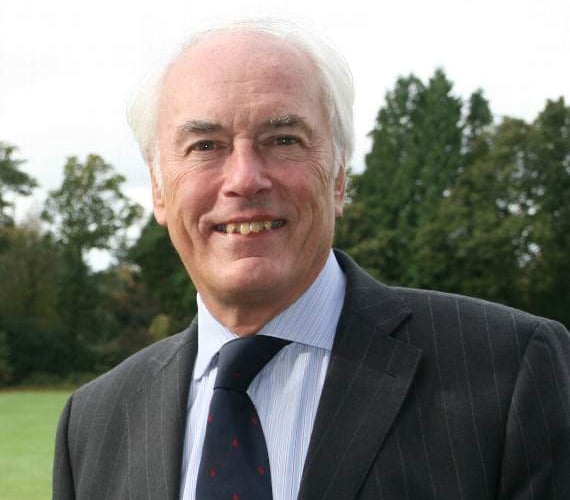
East Hampshire District Council leader Ferris Cowper confirmed: “These changes by central government could have a big impact on a considerable number of our residents and that’s why we have stepped in and joined this campaign.”
Comments
This article has no comments yet. Be the first to leave a comment.