
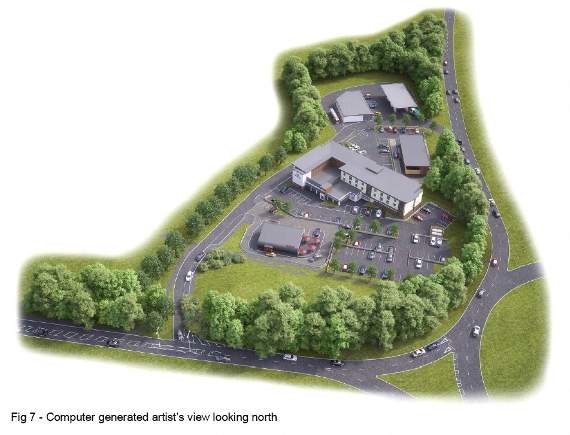
DEVELOPERS hoping to build a motorists’ service area – complete with a 60-bedroom hotel, petrol station and restaurants just off the A31 roundabout at Holybourne – have run into some serious speed bumps.
The outline planning application, on land adjacent to Upper Neatham Mill Lane, was recently refused permission by East Hampshire District Council (EHDC) under delegated powers.
This week, a spokesman for Fibonacci-Architects said their clients, the applicants, are “still considering their position” and haven’t yet decided whether to lodge an appeal against the decision.
The proposal, which included a Premier Inn, associated Beefeater, as well as two drive-through restaurants/coffee shops, had proved contentious. On EHDC’s online planning portal, 147 people commented on the application – 135 of which objected, with just six speaking in support of the plans.



Resounding themes among those not keen on the proposal included concerns of over-development and fears it could open the floodgates for further applications that infill the gap between Holybourne and the A31.
One objector also felt the development was “totally unnecessary” as such services were readily available in Alton itself. Therefore, to provide them outside of the town could possibly be detrimental to local businesses.
Another key worry was traffic, both from customer vehicles using the service area as well as delivery lorries and petrol tankers.
“This development will result in additional unnecessary traffic around this area, an area which already suffers severe congestion at peak times at the A31 roundabout and close to Mill Lane,” one commenter added. “This will only exacerbate the situation, especially as more houses are built in the town over the next 10 years.”
In refusing the application, EHDC echoed many of these concerns.
“The proposal comprises a major intrusion of development in this rural area on a site that lies outside a defined settlement boundary and which is not allocated for development,” the council said. “It has not been established that there is a genuine and proven need for the scale of development proposed in this countryside location.
“The proposed development, by virtue of its size and extent of facilities proposed, would represent a retail and entertainment destination in its own right, rather than a road-user facility proportionate to the primary function of supporting the safety and welfare of the road user.”
EHDC also felt the height of buildings and general scale of the development would “contrast sharply with the open, rural character of the site and would not conserve the tranquil, natural character of the landscape”.
In its application, Fibonacci-Architects explained that the plans came about as the site was subject to an earlier outline planning permission in 1992 for “erection of a petrol filling station, restaurant and HGV parking, with public toilets”.
“The initial proposals for the site have been developed having regard to the earlier outline approval and today’s commercial demands,” the firm added.
Before submitting, it had discussed plans with EHDC officers and consequentially made alterations.
“A significant change to the initial design has been a reduction in the scale and coverage of development in conjunction with incorporation of a picnic area on the southern side of the site for the benefit of the public to act as a buffer zone to enhance existing tree screening along Montecchio Way,” a spokesman for Fibonacci said.
It also tried to allay traffic concerns, explaining that the “vehicle circulation system” around the site has been the subject of “detailed discussion and agreement in principle with Hampshire County Council Highways”.
And they highlighted the layout of buildings which would have been “positioned having regard for existing topography and visual impact”, adding that “each of the proposed buildings reflects the scale appropriate to the respective use”.
Now, faced with refusal, the applicants will decide whether to appeal against the council’s decision, submit a redrafted version of the application or, though this would mean wasting a great deal of time and money, move on to another project.
Ward councillor Glynis Watts was happy to have EHDC officers refuse the application under delegated powers and said their reasons appear “very comprehensive and hopefully defendable should it go to appeal”.
Comments
This article has no comments yet. Be the first to leave a comment.