
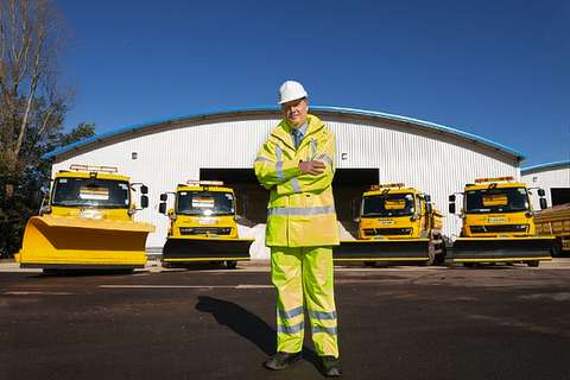
MR Grit, Mr Plough and Rainbow Rocks are ready to roll.
These are three of Hampshire Highways’ fleet of 51 salting vehicles – named by district primary school children – which will be on 24-hour standby, seven days a week from now until next April to deal with wintry conditions.
The fleet have already been out on the roads to ensure they are ready for action. Around 3,700 community salt bins are being filled so people can play their part keeping smaller roads and pavements clear of snow and ice.
The weather and actual road conditions are also being remotely monitored around the clock, with staff on standby ready to act at a moment’s notice.




Sean Woodward, Hampshire County Council’s executive member for economy, transport and environment, said: “This year’s fleet is more impressive than ever with a higher proportion of advanced dedicated spreaders out on the road to tackle what might be coming our way.
“With the opening of our two new salt storage barns at Broadmarsh in Havant last year, we have plenty of salt to spread on Hampshire’s major road network should we experience a prolonged dip in temperatures.
“Our priority is to keep Hampshire moving throughout the winter and for residents to be able to go about their day-to-day business, accessing key amenities such as hospitals, doctor’s surgeries and schools. However, we do ask for a little help from Hampshire’s residents – salt bins are out there to be used for the benefit of your local community, so please help yourselves and your neighbours should the time arise.”
With 5,280 miles of road in Hampshire, highways teams treat them on a priority basis. Priority one routes carry the majority of the total traffic in Hampshire and include A roads, some B roads, major bus routes, roads to major emergency services, large schools, areas of high traffic concentration, and all public transport areas.
These routes are routinely treated when the road surface temperature is forecast to drop below zero degrees celsius and ice or frost is predicted.
During prolonged severe weather, priority two routes, which include remaining B roads and single access roads to villages, may be treated. Additionally, our community routes can also be treated to ensure roads to other smaller schools, GPs surgeries and areas of community activity are usable.
A number of factors are considered when deciding when to salt the roads, including using a dedicated local weather forecast, and the Icelert system which consists of a number of remotely monitored roadside sensors which detect road and air temperatures, and conditions such as wind speed and direction, rainfall, and ice formation.
John Maddy, principal operations manager at contractor Amey, said: “Our highways team has been busy preparing for the winter months, including taking delivery of new vehicles for the winter gritting service.
“All of our vehicles have undergone their annual service and maintenance checks, and completed test runs, and are now based at the highways depots.”
Comments
This article has no comments yet. Be the first to leave a comment.