
RESIDENTS are being encouraged to have their say on new county division boundaries, electoral divisions and division names which could see a change in the way Alton is represented on Hampshire County Council.
The independent Local Government Boundary Commission for England is asking people to comment on its draft proposals as part of an eight-week public consultation that will end on January 11.
The commission’s draft recommendations propose that Hampshire County Council should retain its 78 councillors who will represent 72 single-member divisions and three two-member divisions, one of which is Alton, which will continue to be split into a town and a rural division, but in a different way.
Alton is currently served by two councillors, one responsible for the town and the other for the surrounding rural area, effectively forming a “doughnut”. However, the boundary commission isn’t inclined to continue with such a division pattern which it feels is “unlikely to reflect community identities and interests or communication links in the rural area”.

The proposal is for an Alton Rural division comprising the parishes of Bentley, Binsted, Chawton, Farringdon, Four Marks, Froyle, Kingsley, Medstead, Newton Valence, Selborne, Worldham and the Holybourne area of Alton Town, added to minimise any electoral imbalance.
The recommendation for the Alton Town division is to cover the majority of the town, minus Holybourne but including the rural parishes of Beech, Bentworth, Lasham, Shalden and Wield “in order to avoid a division which is completely surrounded by an Alton Rural division”.
This arrangement is felt to better reflect the boundary commission statutory criteria which is to improve electoral equality by equalising the number of electors each councillor represents, reflect community identity, and provide for effective and convenient local government.
In 2014, the electorate of Hampshire stood at 1,020,276, and in 2021 it is expected to increase to 1,079,000 with 78 councillors serving a population of 13,846 (compared to 13,080 in 2014).
Under the draft recommendations, none of the proposed divisions will have an electoral variance of greater than 10 per cent from the average for the county by 2012.
East Hampshire will continue to have seven county councillors.
The full recommendations and detailed interactive maps are available on the commission’s website at consultation.lgbce.org.uk and lgbce.org.uk. Hard copies of the commission’s report and maps will also be available to view at council buildings and libraries.
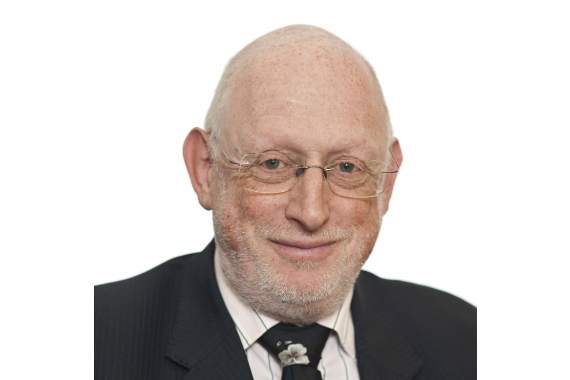
Max Caller, commission chairman, said: “We are publishing proposals for a new pattern of electoral divisions across Hampshire and we are keen to hear what local people think of the recommendations.
“Over the next eight weeks, we are asking local people to tell us if they agree with the proposals or, if not, how they can be improved.”
He continued: “Our review aims to deliver electoral equality for local voters. This means that each county councillor represents a similar number of electors so that everyone’s vote in county council elections is worth roughly the same regardless of where you live.
“We also want to ensure that our proposals reflect the interests and identities of local communities across Hampshire and that the pattern of divisions can help the council deliver effective local government to local people.”
He added: “We will consider all the submissions we receive whoever they are from and whether your evidence applies to the whole county or just part of it.”
Any adjustments to Hampshire’s electoral arrangements would come into effect at the county council’s elections in 2017.
Submissions should be sent to: The Review Officer (Hampshire) LGBCE, 14th floor, Millbank Tower, London SW1P 4QP, or online via lgbce.org.uk.
Comments
This article has no comments yet. Be the first to leave a comment.