
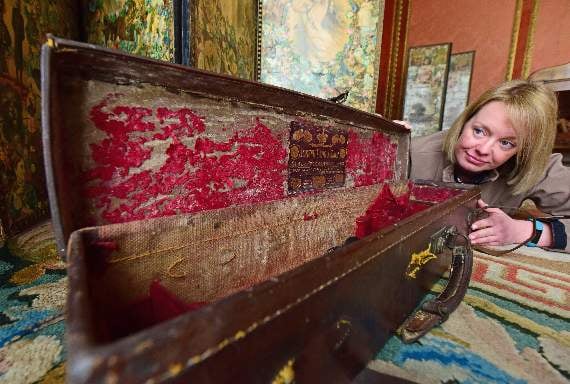
HISTORIC houses, important interior collections and even family homes are at risk from damage caused by an increase in clothes moths and household pests, English Heritage has warned.
The heritage charity, which re-opened many of its houses and historic sites to the public at the beginning of April, has revealed that monitoring by their team of expert conservators has seen the number of clothes moths double over the past five years, with a new species, monopis sp (also known as the pale-backed clothes moth), beginning to appear for the first time.
To combat this threat, English Heritage is calling on the public to join Operation Clothes Moth and help to measure the extent of these household pests. Anyone visiting an English Heritage site has been able to collect a free ‘clothes moth trap’ to place in their home, which the charity hope will help to map the spread of insect pests across the country.
Amber Xavier-Rowe, head of collections conservation for English Heritage, said: “At English Heritage we regularly monitor insect pest activity to ensure our collections get the best possible care, but any sudden change in species behaviour or increase in numbers is a concern.




“Many people around the country will no doubt know the exasperation of finding clothes moth damage in a much-loved jumper or coat, so we want people to come to our sites, collect a free clothes moth trap, and get involved.
“While we suspect factors including warmer weather and the increased use of heating inside homes is partly to blame, we hope this campaign helps us to better learn how to combat the rise of the clothes moth.”
Clothes moths, particularly the common or webbing clothes moth (tineola bissellella), are a common threat to interiors as they live indoors and their larvae feed on woollen carpets, clothing, upholstery, fur and even taxidermy, resulting in the appearance of holes or patches.
English Heritage has been actively monitoring the spread of clothes moths since 1995, and now monitors at more than 40 sites across the country, with the aim of preventing damage to the more than 500,000 historic artefacts in their care across England.
Monitoring has recently discovered another species of moth, monopis sp, which has previously not been found in historic houses. The traps, which are impregnated with the female sex pheromone of the clothes moth, are now available and the charity hopes that feedback from the campaign will help to map the spread of clothes moths across the country, and inform future prevention measures.
Traps are available from all English Heritage-staffed properties, and visitors are asked to place them in their own homes and feed their findings back later this year.
In Hampshire, participating sites include Portchester Castle and the Medieval Merchant’s House in Southampton.
Visit english-heritage.org.uk/operationclothesmoth.
Comments
This article has no comments yet. Be the first to leave a comment.