
THE importance to Alton of the adoption of its neighbourhood plan was clearly outlined during a packed community forum meeting on Tuesday.
If it receives public approval during the referendum on February 24, its policies will become deliverable by law and Alton will have a development plan framework for the future which should protect it from inappropriate, unplanned development.
If it gets a ‘no’ vote, East Hampshire District Council (EHDC) will have to prepare its own housing allocation for Alton which may not be the same as that contained in the plan.
In delivering a clear and detailed presentation of the neighbourhood plan, steering group member David Allan left his audience in no doubt – to vote ‘yes’ was imperative if the town is to develop with a degree of local control.


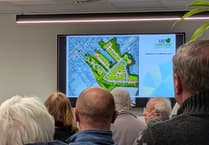

Developed over the past two years in response to the Government’s requirement to allocate a significant number of new homes across the country, the neighbourhood plan is predominantly a housing allocation plan, created and defined through community engagement and approved by Alton Town Council, but including important policies on transport, health and community, education, and economic sustainability and viability.
During the course of its evolution, the plan had been subject to constant scrutiny and public consultation, ending with a final examination by an independent examiner who has made some changes, not least in terms of the housing allocation figure.
The neighbourhood plan is based on the fact that Alton is required to take a minimum of 1,713 new homes between 2011 and 2028, of which 1,031 are already pre-allocated, leaving a minimum of 700 to be built on greenfield sites, identified as Borovere Farm, Treloar, Cadnam Farm, and Will Hall Farm, with two smaller sites at Wilsom Road and Alton Convent School.
While the neighbourhood plan came up with a figure of 721 over the six sites, during the course of the plan EHDC added a further 150 pre-allocated for the Treloar site and an additional 156 were given planning approval on the Treloar and Borovere sites, bringing the final total to 1027 – a figure the examiner agreed.
According to Mr Allan, while the steering group could challenge this figure, to do so could take another three years.
Despite some additional changes, in particular to transport policies, it has been decided to accept the examiner’s decision and go to referendum on February 24 when, if a ‘yes’ vote is recorded it will establish the plan as a statutory planning document, for use by the local planning authority, securing the housing site allocations and enabling Alton Town Council to receive a financial contribution of 25 per cent from all developments under the community infrastructure levy arrangement. If, however, the public vote ‘no’, the town council will receive a capped 15 per cent levy contribution and EHDC will have to prepare its own housing allocation for Alton which, according to Mr Allan, will take time, during which developers could have an unrestricted field day, and would probably see the revival of proposals for development of two large sites along the Old Odiham Road.
While polling cards are being sent to all Alton residents ahead of the referendum, the town council has prepared a ‘brief guide to the neighbourhood plan’ to give residents a factual overview of the full document and detailing the implications for Alton should the plan be approved or rejected.
To view the plan online, visit alton.gov.uk.
There will be two drop-in public information sessions prior to the referendum – at Alton Assembly Rooms on February 8 and February 22, from 3pm-8pm both days.
Comments
This article has no comments yet. Be the first to leave a comment.