
Keep politics out of our weekly shop
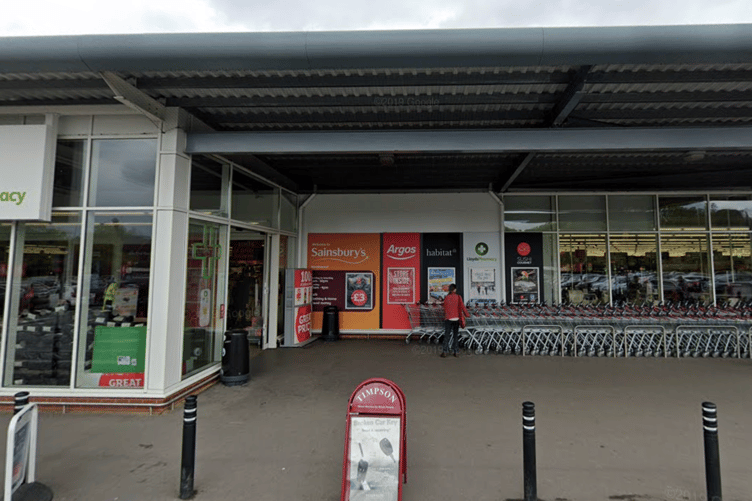
I’m writing about the recent campaign calling on Tesco to remove certain products based on their country of origin. I mention Tesco simply because it’s where I happen to do my weekly shop — it could just as easily be any other supermarket facing similar pressure.
I fully respect the right of individuals to campaign for causes they believe in. However, I’m increasingly uneasy about what seems to be part of a wider pattern of Boycott, Divestment and Sanctions (BDS)-style activism directed at everyday businesses.
I’ve heard, anecdotally, that similar campaigns have taken place in other supermarkets and areas, so this does not appear to be an isolated case. I’ve also read about door-knocking linked to these efforts. While I admire the commitment, most people probably don’t expect to debate foreign policy on their doorstep while trying to get dinner on the table.



Supermarkets operate within UK law and government trade policy. Their role is to sell groceries, not to referee complex international disputes. Tesco may offer meal deals and Clubcards, but it isn’t a diplomatic summit in disguise. I go there for milk and bread; I don’t expect a briefing on global affairs at the checkout.
There is also the practical question of food waste. Removing perfectly good products because of political pressure risks stock being discarded — hardly a good look at a time when we are all being urged to reduce waste and live more sustainably. It would be ironic if campaigns framed in the language of justice ended up contributing to unnecessary waste.
If there are genuine concerns about labelling, then clarity and transparency are entirely reasonable requests. But asking retailers to take sides in global conflicts risks politicising spaces that are meant to serve everyone. What starts with pressure on one supermarket may not end there, and I worry about the precedent this sets for other local businesses simply trying to serve their communities. Today it’s the fruit and veg aisle; tomorrow are we asking the corner shop to draft a peace plan?
Consumers are, of course, free to make their own purchasing choices — that is their right. But expecting the weekly shop, or even the doorstep, to double as a foreign policy forum feels like a step too far. Most of us are simply trying to buy groceries, not broker peace deals between the bananas and the baked beans.
Angela Stott,
Woking
Keep politics out of local planning
The Draft South East Plan (SE Plan) covering 2006–2026 called for the provision of an additional 5,200 new homes in the county. Of these, 4,000 were to be located somewhere in central Hampshire, while the remaining 1,200 were planned for the three Southern Parishes — Horndean, Clanfield and Rowlands Castle. Furthermore, according to East Hampshire District Council’s Core Strategy (Issues and Options on Housing) at the time, these figures were not intended to be rigid, as the Government might later decide they should be increased.
With a forecast of 1,200 new homes across the three Southern Parishes, what has been the outcome over the past 20 years?
In Horndean alone there has been a considerable shift towards reasonably large-scale development. On Land East of Horndean (LEOH), a major expansion of about 750 homes is currently under construction. A planning application for 85 homes on farmland bordering White Dirt Lane in north Horndean is in the pipeline and, as reported in the Petersfield Post (“More Homes Planned for Horndean Farm”, February 12), there is also a proposal for 125 homes at Charity Farm, south of Drift Road.
This brings the total to 960 homes, a figure that does not include additional smaller infill developments on brownfield and windfall sites. Nor does it include the recently built Blendworth Hills Retirement Village, a greenfield development consisting of 120 living units and cottages plus a 60-bed care home on the outskirts of Horndean.
As a Horndean parish councillor, I attended a Community Forum (Southern Parishes) meeting in June 2008, when the head of EHDC Planning Services, Daryl Phillips, stated that for the first 10 years of the SE Plan period, infill developments would not be counted as part of the SE Plan totals. I subsequently investigated infill developments in Horndean and found that between 2004 and 2007 inclusive, a total of 225 such homes had been built, averaging 56 per year. More significantly, 150 of those homes were built in the final two years of that period.
I have no figures for the rate of infill development during the remaining years of the SE Plan, but even if the rate fell to as low as 40 per year, the 10-year period cited by EHDC would generate another 470 homes to be added to the 960 already referenced, bringing the total to approximately 1,430 homes — well above the 1,200 homes identified in the SE Plan.
Adding the build figures for Clanfield and Rowlands Castle, whatever they may be, it is easy to see that the planned total of 1,200 homes for the three Southern Parishes could, I suggest, easily be double that figure.
What does a figure of 1,430 households mean for Horndean alone? According to the 2021 Census, the national average household size is 2.4 people, equating to more than 3,400 new residents. The same census shows an average of 1.2 vehicles per household, meaning an additional 1,700 vehicles. However, with 45 percent of households owning one vehicle and 35 percent owning two or more, even that figure may be an underestimate.
Do we, the public, get a say in how many new households the Southern Parishes can absorb? The answer is probably no, because EHDC’s Local Interim Planning Statement (2014) includes the following acknowledgement: “It is acknowledged that new developments in the village of Clanfield are unavoidable for political and practical reasons…”. It may reasonably be assumed that this statement also applies to Horndean and Rowlands Castle.
Having lived in Horndean since 1962, I have watched the population grow from about 6,000 to more than 13,500. Sadly, while the population has more than doubled, the infrastructure needed to sustain that growth — including public services, schools, GP capacity and parking — has increased only slightly, resulting in an unfavourable imbalance. In some cases, provision is now totally inadequate, and this is likely true across all three Southern Parishes.
I therefore believe it is incumbent upon EHDC Planning Services to give serious thought to the pressures local communities will face under the weight of future development without improved infrastructure. In short, plan with the people instead of planning over them — and put people before politics.
Robert Davis,
Hawthorn Road,
Horndean
An Ode to Haslemere
Haslemere, you are a beauty — do you know that? This is an ode to you, Haslemere.
You are delightful in your quaintness and quintessential Englishness. Streets lined with mostly homespun shops, blue sky adoring you today and lit by sunshine.
Your beams and frames date back to a time gone by. People mill around the streets on a Sunday in early January — the start of a new year and season.
The escritoire gives me a spectacular view of you. A greyhound in a blue coat pads by with a woman in a pink scarf. Another passes with earmuffs and sunglasses.
My radio plays ‘Because You’re Gorgeous, I’ll Do Anything for You.’
Sandra Delport,
High Street,
Haslemere
Woe for Haslemere
I was pleased to see the letter from Doug Thow (Herald & Post, February 19), which sums up the situation Haslemere is now in and suggests Haslemere should not be in Surrey — a view I have supported for over 20 years.
I wonder if Haslemere is being deliberately neglected. Both wards at Haslemere Hospital were closed by Royal Surrey NHS Foundation Trust over nine months ago, but there has been no public consultation, as required by NHS rules.
The roads in Haslemere are a total disgrace, with huge potholes shown as reported on Surrey County Council’s website left unattended for weeks.
High Street (A286) has large holes; the A287 from Haslemere to Hindhead is like a ploughed field. Busy roads, including Derby Road and Beech Road, where the Urgent Treatment Centre is located, have huge, dangerous potholes.
I have travelled in other parts of Surrey — Godalming, Guildford, Hersham and Cobham — in recent weeks and, surprise, surprise, no potholes.
The train service to Portsmouth has been reduced by 33 percent. Lloyds Bank informs me that my branch, which was Haslemere, is now Waterlooville — not in Surrey.
So why is Haslemere being neglected? It was not like this five years ago. There can now be no advantage to being in Surrey — high cost, no services.
Robert Knowles,
Beech Road,
Haslemere
Comments
We've recently changed our login process. If you have an account for commenting, you will need to re-register on the login window.
This article has no comments yet. Be the first to leave a comment.