
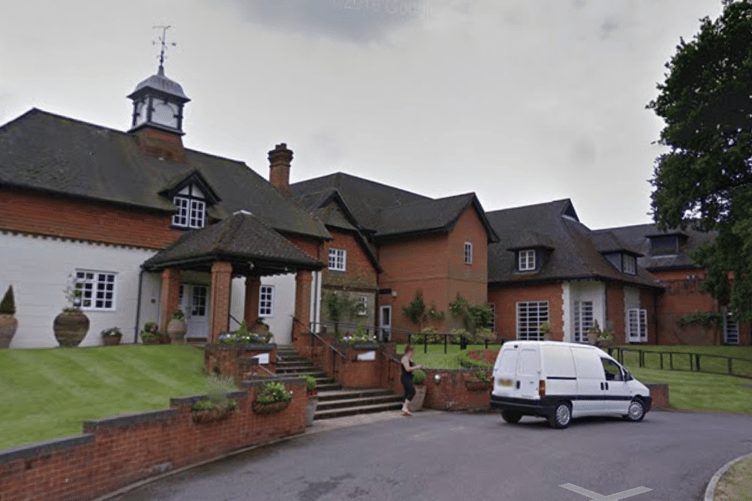
Visitors arriving at Forest Mere spa near Liphook seek relaxation, wellbeing and an escape from busy lives, writes Helen McClure.
Yet long before wellness breaks and spa treatments became popular, the house was home to a remarkable family whose lives reflected some of the great social and political changes of the early 20th century.
Among the most fascinating figures were mother and daughter Blanche and Rotha Lintorn-Orman. Their lives took very different paths, but both left an unusual mark on British history.
Forest Mere was built between 1891 and 1892 as a country house for Sir Henry Cotton, a Lord Justice of Appeal. Tragedy struck before the house was completed when Sir Henry lost his wife, Clemence. He moved to Forest Mere with three of his children and seven servants, but died in 1892.
A new family arrived in 1894. Charles Orman was a major in the Essex Regiment, while his wife, Blanche Lintorn-Orman, brought the wealth that made Forest Mere affordable. Her father was Field Marshal Sir John Lintorn Simmons, governor of Malta from 1884 to 1888, and she was heir to his estate.
The house had 31 rooms and was cared for by 12 servants. Charles and Blanche's only child, Rotha, was brought up with a strong sense of service. At a time when opportunities for young women were changing rapidly, Blanche championed women's interests by forming a Girl Guide company at Forest Mere and becoming the first county commissioner for Hampshire East.
The countryside around Liphook provided an ideal setting for these new ideas. Woodland walks, outdoor pursuits and self-reliance were increasingly valued, while the area's natural landscape offered an escape from urban life. The ideals of healthy living and time spent outdoors seem particularly fitting given the site's later role as a health retreat.
Rotha, meanwhile, sought to break the mould by joining the Scout movement, using only the initial of her first name so she would not reveal that she was female.
But Rotha's later life tells a less wholesome story.
She came of age during a period of enormous social change, and her experiences during the First World War brought greater freedoms. She served in military organisations and became a decorated ambulance driver.

After the war, her strong political views made her one of the most controversial women of her generation. Finding political activism filled the void left by the excitement of wartime service, she founded the British Fascisti in 1923, the first organisation of its kind in Britain.
While the movement never achieved widespread political success, Rotha's activities attracted considerable public attention during the 1920s. Her life became increasingly troubled. Her reputation was damaged by rumours about her sexuality, while her health declined through addiction to alcohol and drugs. She died aged just 40.
Forest Mere is a reminder that important national stories often have local origins. Behind the peaceful woodland setting was a family connected to major questions about women's roles, political change and British society between the wars.
The contrast between mother and daughter is particularly striking. Blanche devoted much of her energy to encouraging and supporting young women through the Guiding movement. Rotha pursued extreme political ideas during a period of national instability and uncertainty.
Their stories illustrate the opportunities and tensions facing women during the early 20th century. Previous generations had largely been confined to domestic roles, but women born in the late Victorian era encountered entirely new possibilities. Some pursued education, voluntary organisations and social reform, while others became involved in politics and public life.
Forest Mere itself also evolved. Like many large country houses, it became increasingly difficult to maintain during the 20th century. Changing economic conditions, taxation and the decline of domestic service altered the fortunes of many estates.
Eventually, the house entered a new chapter as a health and leisure destination, becoming the spa resort familiar to many visitors today.
*Helen McClure is the interior designer behind At Home by Design, a Surrey-based interior design studio specialising in creating interiors that reflect both a client's lifestyle and the character of their property. She can be found on Instagram at @athomebydesign1, by visiting www.athomebydesign.co.uk or by emailing [email protected].
Comments
This article has no comments yet. Be the first to leave a comment.