
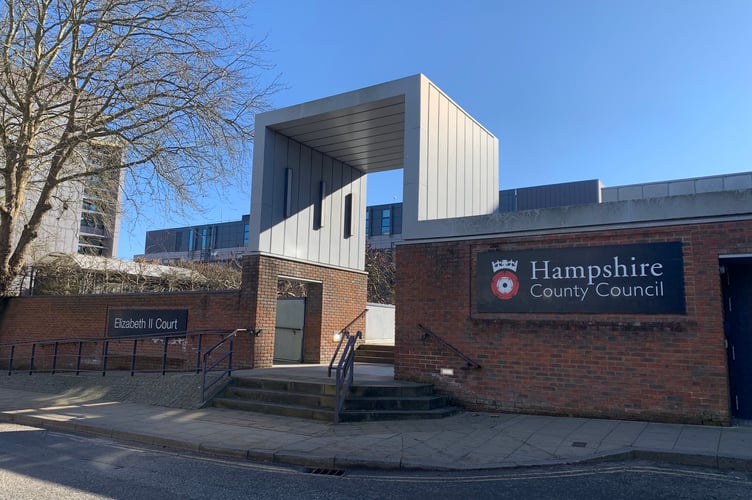
The Hampshire County Council elections have brought an end to nearly 30 years of Conservative control, with no party winning enough seats for an outright majority.
The result has created a fractured political landscape at County Hall, with negotiations now underway between party groups ahead of the council’s Annual General Meeting on May 21, when a new administration is expected to be agreed.
So what happens next?
Of the 78 seats on the council, the Conservatives remain the largest group with 27 councillors, closely followed by the Liberal Democrats with 26. Reform UK secured 20 seats, marking a major breakthrough for the party in Hampshire politics.

The remaining seats are held by smaller parties and independents, including the Green Party, Labour, Whitehill & Bordon Community Party, Community Campaign Hart, and one independent councillor.
The outcome means Hampshire County Council is now under “no overall control” — meaning no party has enough councillors to run the authority outright.
Following the election, newly elected councillors gathered at county council headquarters in Winchester to sign their declarations of acceptance and formally take office.
Among them was Cllr David Harrison – who represents Totton South & Marchwood for the Lib Dems. He said stability would be a key concern over the coming weeks.
He said: “After 30-odd years of Conservative rule at Hampshire County Council, things have finally shifted. The Tories have lost overall control.
“Each of the political groups now have to decide how to proceed, given that voters have not given any one party political control.
“My immediate concern is providing some degree of stability, so that the county council and staff can deliver services for the next two years before the authority is abolished.”
He added that governing the council in its current position would require cooperation between political groups.
What could happen?
Several outcomes are possible as negotiations continue behind the scenes. This could include a Conservative–Liberal Democrat administration, a Conservative-led minority administration, a Conservative–Reform UK agreement, or a no formal coalition governance.
If no coalition is agreed, support would need to be negotiated on a case-by-case basis during council meetings.
Gary Westbrook, county returning officer and the council’s chief executive said: “As no party has a majority of more than 50 per cent of seats on the county council, the parties may now enter a period of negotiation to decide the make-up of the new Administration.
“At the county council’s Annual General Meeting on May 21 the new leader of the county council will be elected, alongside a new Chairman and vice chairman.”
Wider changes ahead
Looking ahead, the political uncertainty is compounded by wider structural change.
Local government reorganisation and devolution plans mean that the current council will only operate for a limited period before new unitary authorities are established.
As a result, councillors elected in 2026 will play a crucial role not only in day-to-day governance, but also in shaping the framework of Hampshire’s future political structure.
For now, attention remains on the negotiations taking place before May 21, and who will eventually emerge to lead Hampshire County Council in one of the most politically significant moments in its recent history.
The political make-up of the county council is now:
Conservatives – 27
Liberal Democrat – 26
Reform UK – 20
Green Party – 1
Labour – 1
Independent – 1
Whitehill & Bordon Community Party – 1
Community Campaign (Hart) – 1
Comments
This article has no comments yet. Be the first to leave a comment.