
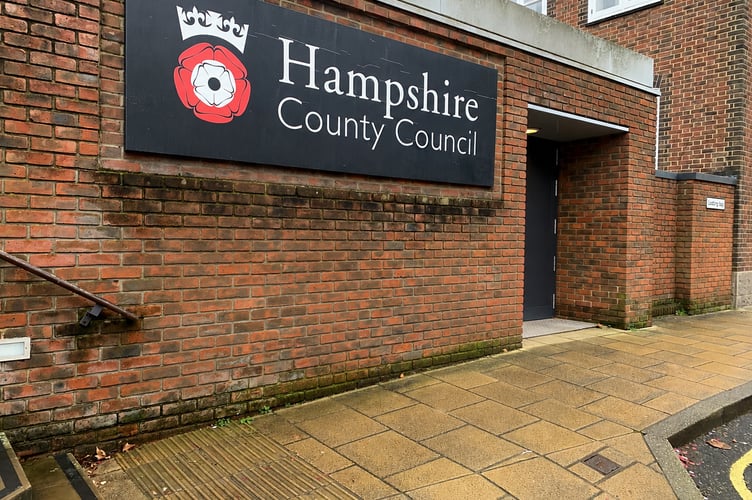
The amount of money spent by Hampshire councils preparing for the now-withdrawn merger plan is currently unclear.
Councils across the county have been investing time, resources and money to be ready for the creation of four new larger unitary authorities under the government’s local government reorganisation (LGR) programme.
That changed on Monday, September 7, when communities secretary Angela Rayner announced she was withdrawing approval for LGR in Hampshire, which had been granted by her predecessor in March.
Ms Rayner said this was in light of new legal advice.
The former secretary of state Steve Reed said each new unitary authority would be entitled to £900,000 to assist with the transition process.
The costs of the merger were expected to be significantly higher, with councils footing this bill from their own resources.
Last year, based on work carried out by consultants KPMG, it was estimated the indicative one-off LGR implementation costs for the county and island would be £133 million.
Hampshire County Council suggested in May the cost would be between £80 million and £132 million.
The Local Democracy Reporting Service (LDRS) contacted all 15 councils involved in LGR across Hampshire and the Isle of Wight on the morning of Tuesday, September 8, to ask for the costs incurred preparing for LGR.
Seven councils have responded to the LDRS, with only Isle of Wight Council providing figures.




Labour Southampton City Council leader Sarah Bogle said: “Southampton City Council has incurred costs in preparing for Local Government Reorganisation following the government’s decision earlier this year.
“Throughout the LGR process we have worked to ensure expenditure has been carefully managed so it is proportionate to meet statutory and organisational requirements.”
As reported by the LDRS, Southampton City Council leaders signed off on recruiting 17 new roles to prepare for LGR this year, with salaries totalling £879,933.
The recruitment was due to be funded from the council’s £3.5 million LGR reserve.
A spokeswoman for Havant Borough Council (HBC) said the authority had fully engaged in the LGR programme both in the development of proposals and preparation for the creation of new unitary authorities.
The spokeswoman said: “Central Government made some funding available to local authorities in the early stages to help prepare business cases for change, but most of the work on LGR has been carried out by existing council staff alongside their usual duties.
“HBC has always sought to take a balanced approach to supporting the delivery of LGR whilst maintaining frontline services.”
A spokesperson for Fareham Borough Council said the LGR process had involved significant collaboration between authorities over many months alongside the day-to-day delivery of council services.
They added: “The work has drawn on a wide range of existing council resources, including officer time from numerous service areas, as well as some specialist external support commissioned jointly by councils where appropriate.
“As this activity has been embedded within wider council operations, it would take a considerable amount of time to provide a comprehensive or meaningful figure for the total cost of the programme to date.”
Liberal Democrat Portsmouth City Council leader Steve Pitt said: “A huge amount of funding, as well as officer and councillors’ time and resource has been put into the now withdrawn Hampshire Local Government Reorganisation, which could have been better used for vital services residents rely on.
“The process for including Portsmouth in reorganisation has been totally mismanaged.”
Cllr Pitt said the council’s stance remained the best thing for Portsmouth was for the local authority to be left as it is.
A Test Valley Borough Council spokeswoman said they had committed significant resource to the government-led process.
The spokeswoman said: “While we did not ask for local government reorganisation, we have approached it constructively and collaboratively, with an unwavering focus on securing the best, evidence-led option for our residents, businesses and communities.
“The resource we have invested has always been in pursuit of this, making sure that we put people and communities at the heart of public services.
“Whatever comes next, this will not change.”
New Forest District Council (NFDC) said it invested time and resources in preparing for LGR as it had a responsibility to make sure the interests of residents, communities and the local economy were properly represented.
A spokesperson said: “The costs associated with that will be reviewed, with the council’s immediate priority being to understand what the government’s review means for the district and what the process will now be.
“NFDC are keen to work constructively with government and fellow councils to ensure that whatever happens next is based on sound evidence and delivers the best possible outcome for residents.”
Isle of Wight Council, which would have continued under its existing arrangement as a standalone authority, spent £33,830.57 on LGR-related activity.
This sum was entirely related to consultancy work.
Rushmoor Borough Council said it was not possible to provide figures on the costs of preparing for LGR at this stage.
The councils that responded to the LDRS said they would await the outcome of the government’s review of LGR plans in Hampshire and consider any implications as further details emerge.
Comments
We've recently changed our login process. If you have an account for commenting, you will need to re-register on the login window.
This article has no comments yet. Be the first to leave a comment.