
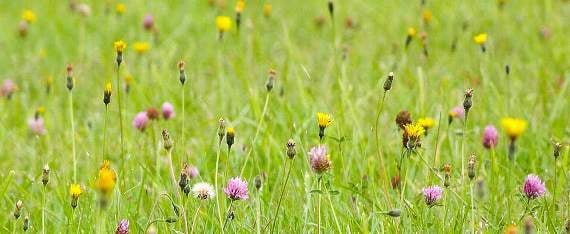
PRESERVE Treloar Meadows campaigners will be in Alton on Saturday morning wielding placards and leaflets in a bid to gain public support for their cause.
In a peaceful show of strength, they will be demanding East Hampshire District Council (EHDC) planners carry out a proper environmental impact assessment as part of the reserve matters application for a 280-home development on part of the former Lord Mayor Treloar Hospital site that threatens to destroy the delicate ecology of the meadows.
Part of Alton’s carefully preserved skyline, this rare chalk downland is a natural haven for flora and fauna, in particular its treasured collection of native orchids.
In a letter to East Hampshire MP Damian Hinds, thanking him for agreeing to take the matter up with Environment Secretary Michael Gove, the acting chairman of the Preserve Treloar Meadows Campaign, Ginny Boxall, pointed out that 96 per cent of chalkland meadows like this have been destroyed over recent years.

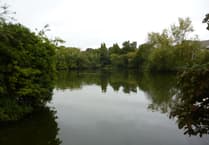

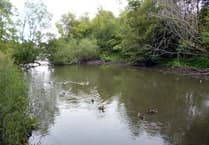
In seeking to protect what is a valuable environmental asset, Mrs Boxall told Mr Hinds that not only do the Treloar meadows provide a home for rare species, like small heath butterflies and white helleborine, they also form a wildlife corridor for the adjacent ancient Alexandra Wood along which barn owls, badgers, roe deer and dormice can roam.
In the middle of the site are two iconic water towers, all that remains as a legacy to Sir William Purdie Treloar, who founded the Lord Mayor Treloar Hospital, which went on to become a world-renowned orthopaedic hospital.
Mrs Boxall said: “Sir William chose the location because of the fabulous wildflower meadows and woods and he understood the importance of such spaces for the mental wellbeing of the soldiers and children who came through the hospital doors.
“We are now in danger of losing all of this rich ecology as Homes England have outline planning for 280 homes which will destroy most of these meadows. They are irreplaceable, and isn’t it rather ironic that a few miles down the road the South Downs National Park are desperately trying to recreate meadows such as we have here on our doorstep!”
As part of their drive to secure an environmental impact assessment on the site, campaigners point out that in 2012 EHDC planners insisted that such an assessment was needed on the site but took a U-turn three years later when it was deemed unnecessary.
By way of explanation, Mr Hinds pointed out that this would be down to a material difference in the two applications, the first of which did not indicate the whereabouts on the site of any development, while the second showed that the Site of Importance for Nature Conservation would not be built on but would be preserved as open space.
While Site of Importance for Nature Conservation data is held by the Hampshire Biodiversity Information Centre and is used by EHDC in determining the need for an environmental assessment, Mr Hinds said that the data for the Treloar Site of Importance for Nature Conservation does not appear to contain evidence of rare species on the site as flagged up by PTMC. He therefore urged the group to record and share this evidence with EHDC as soon as possible.
The developer would need to confirm the presence or absence of any protected species as part of an ecological submission update. EHDC should then have both sets of data checked by the county ecologist before issuing its screening opinion.
EHDC confirmed this explanation, adding that last Thursday Homes England appointed developer Crest Nicholson South had asked EHDC to consider whether an assessment would be necessary for the development of land at Lord Mayor Treloar Hospital on Chawton Park Road.
An EHDC spokesman said: “The council’s planning team now has three weeks to consider the request and will consult with other organisations such as Hampshire County Council’s ecologist and highways to form an opinion.”
But having carried out an assessment against the specified criteria within the Environmental Impact Assessment Regulations (2017), and in conjunction with the relevant guidance, the applicant believes an assessment should not be required, stating that: “The development represents a strategic scheme for Alton, but due to the well-confined nature and the urbanised surroundings of the site, any impact will be limited to the immediate vicinity of the site.
“It has been demonstrated, using the Environmental Impact Assessment Regulations and National Planning Policy Framework, that the site is not in an environmentally sensitive location and will not result in significant environmental effects. It is therefore unlikely that an environmental impact assessment would produce any more necessary evidence for this site.”
The statement has triggered alarm amongst campaigners who have cross-party support for their view that if an assessment was deemed necessary in 2012 then it should be just as necessary now - a view reinforced by the Environmental Law Foundation, which agreed with Preserve Treloar Meadows Campaign that “the need for an environmental impact survey does not erode with the passage of time”.
They are hoping that a recent ruling in the European Court of Justice regarding the Habitats Directive which, in England, removes the National Planning Policy Framework presumption in favour of sustainable development, and does away with mitigation measures, will prevent the developers opting out of an appropriate environmental impact assessment.
Comments
This article has no comments yet. Be the first to leave a comment.