
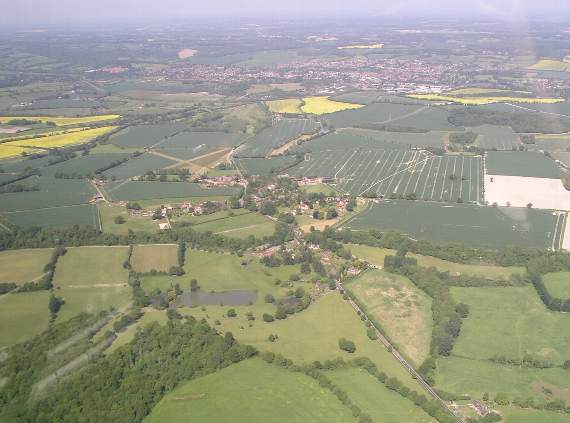
IF nothing else the Vision Design Statement 2030, published by Worldham, is a stunning pictorial record of the spectacular scenery of the village as well as highlighting its beautiful and historic architecture.
Wonderful photographs show sweeping countryside, village houses, honey-coloured walled gardens, the pub on a snowy day, sunken lanes and ancient woods filled with wild flowers, newly-harvested fields, and its three historic churches.
As well as each of the seasons being reflected, in colour changes and landscape, are snapshots showing the conversion of some of the older properties that have helped them retain their charm and character.
However, although the statement is a wonderful pictorial guide, compiled by a dedicated team of volunteers, the information in them is highly important for the future of Worldham as it outlines what villagers want and don’t want, acting as a guide to council planners when they are looking at more development in the area.



Worldham isn’t opposed to new housing, unless it is poorly designed and doesn’t make a “positive contribution to local character and distinctiveness” of the village near Alton.
Worldham has a population of 350, with 66 per cent living in East Worldham and 34 per cent in West Worldham and Hartley Mauditt. The design statement reveals the good news that a number of younger families have moved into the parish, a “welcome diversity” to what was becoming an ageing population.
The statement covers every aspect of village life: the parish boasts an iron fort, a Roman road and the remains of a mediaeval hunting lodge plus a number of Listed buildings. Old House Farm in East Worldham dates from the 13th Century and was a fortified manor house.
Being a rural area, the economics of the parish are typically mixed with some parishioners still working on the land, arable farming being the dominant activity, while others run their own business or commute but mostly to neighbouring locations or London.
The village can still boast a pub, the Three Horseshoes, as well as having three beautiful old churches.
Each summer the population swells to 30,000 for a short time when visitors come to the village for the Ahmadiyya Muslim Jalsa Salana convention.
A lot of focus in the statement is on the mix of architecture of the houses which have helped to form the charm and character of the parish and mention is given to Hartley Mauditt being one of the “lost villages of England”.
There is also a call for new development to be restricted and avoiding greenfield sites and extensions of existing development boundaries.
Any exceptions should be only if they are of exceptional design quality and in harmony with landscape features and settings.
Also, to keep the open character of the village and minimise the impact on biodiversity, the building of houses in existing gardens should be allowed only where generous standards of separation can be met.
New houses should also have good parking to stop residents reversing into the lanes while, due to absence of mains drainage, particular regard should be given to the design and suitability of proposed sewage and drainage systems.
Worldham is bordered by two busy main roads that bring a lot of traffic through the village, but it is the single track and sunken lanes that are causing concern as they are being damaged by vehicles that ignore the weight restrictions and tend to damage the banks and road edges.
But despite this, residents say as part of the planning guidelines they want to avoid urbanisation by installing “inappropriate surfaces, kerbs or treat furniture” along these lanes.
Also, repairs or changes to roads, lanes and footpaths should maintain the character of the sunken lanes and rural nature of the parish.
Street lighting should be kept to the minimum necessary for safety and security, and on any new development cabling for utilities should be placed underground, the statement says.
Permission should be refused for development of poor designs and applicants should be expected to work closely with those directly affected by their proposals to produce designs that take account of the view of the community.
Emphasis has been placed on “keeping an eye on future development”, now more important than ever as 77 per cent of respondents considered new development within the parish was not just inevitable but also desirable provided it is done in a controlled and sustainable way.
The design statement and its vision of the future of the village until 2030 was adopted by East Hampshire District Council at the Alton forum meeting at Alton Community Centre on January 26. It has also been officially adopted by the South Downs National Park Authority.
Comments
This article has no comments yet. Be the first to leave a comment.