
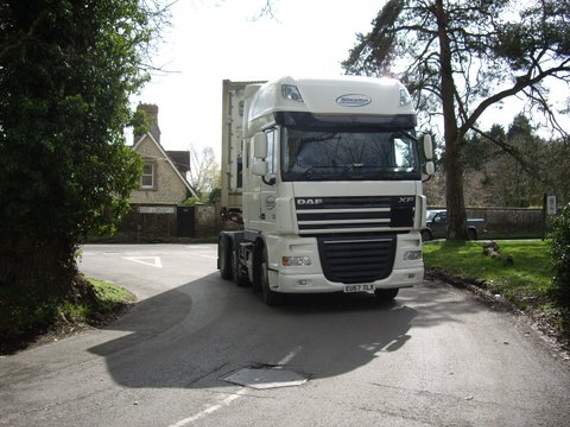
A PLANNING application that will see yet more heavy lorries pounding the narrow sunken lanes around Gilbert White’s historic Selborne village is to be given the go ahead under delegated powers.
According to Selborne beef farmer David Ashcroft, East Hampshire District Council’s (EHDC) representative for Selborne, Blackmoor and Oakhanger, the application by prospective tenant Mary Sweere for change of use at Albury Dairy, Honey Lane, Blackmoor, of redundant silage store and slurry pit from agricultural use to wood chip drying B2 (general industry), was to have been debated by district council planners on Thursday but will now be passed by officers following an agreement over access.
The compromise has been reached after Hampshire Highways pulled the rug from under the feet of local planners by raising no objection to the proposal.
By so doing it took away any powers the planners would have had to fight the application through the appeal process and has triggered fierce criticism over a system that encourages comment on just one application in isolation but fails, it seems, to take into account the accumulated impact of additional traffic from a number of sites on the surrounding road network, however unsuitable.


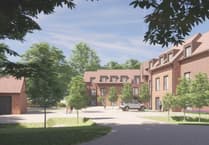
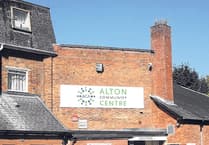
In this case it amounts to seven sites within close proximity of one another, all on the Blackmoor estate, that have secured change of use on redundant farm buildings to light industry but with the majority, according to county councillor Mark Kemp-Gee (Alton rural), requiring access by large articulated lorries.
Like his district colleague, Mr Kemp-Gee criticises a system that allows these applications to be considered piecemeal and with no comprehensive transport strategy, resulting in a policy which he believes is damaging to the rural environment.
Due to sheer size, these vehicles, he claims, often cause dangerous situations, gaining access via historic sunken lanes, such as Honey Lane and Sotherington Lane, that were not built for motorised vehicles and do not allow for the easy passing of two-way traffic.
The decision to withdraw the application from committee follows agreement, by Mr Ashcroft as the ward representative, to a condition that will prohibit the use of articulated vehicles accessing the Albury farm site, together with a restriction amounting to just two lorry movements (one in, one out) per day or a maximum of 10 per week.
Believing this to be the best deal on the table, bearing in mind the lack of support from Hampshire Highways, Mr Ashcroft has been given an assurance that all lorries accessing the site should not exceed 25 tonnes and rigid, which should cause less of an impact on the surrounding sunken lanes than an articulated vehicle.
Being a farmer himself, David Ashcroft understands the need for agricultural diversification, but he is still not happy with the cumulative impact of seven different areas on the Blackmoor site all attracting heavy goods vehicles onto the surrounding lanes, and he is angry that highways officers have failed to take this into account.
Their lack of support, however, means that to turn the application down would risk it failing at appeal, with the cost being shouldered by East Hampshire taxpayers.
In expressing hope that the Blackmoor Estate will follow a policy of environmental protection, he suggests that a solution could be to take these heavy goods vehicles off the A3, via the Ham Barn roundabout and onto a road across farmland owned by the estate, which could be linked to all seven sites with little access onto the public highway. He also argues that the situation can only get worse and failing to investigate solutions could be seen as neglect.
While he did not comment on this aspect, William Woolmer, who owns the Blackmoor Estate, explained that the planning application had not been submitted by the estate itself but by a prospective tenant of the dairy site.
However, regarding the associated lorry movements, he said: “It is important to note that this application is not intending to increase lorry movements on rural lanes from the former use at all. The Albury Dairy site was a working dairy for more than 50 years served by a daily milk tanker (HGV). My understanding is that the lorry movements serving the woodchip facility at the former dairy will be no more than have historically accessed the dairy and via the same route and which was never controversial.”
The county council was unavailable for comment when the Herald went to press.
Comments
This article has no comments yet. Be the first to leave a comment.