
Dementia is a set of symptoms caused by a disease damaging nerve cells in the brain.
The symptoms vary by the type of dementia (such as Alzheimer’s or vascular dementia) and by individual. Because it is a disease of the brain, and the brain controls everything, dementia can affect physical as well as mental and cognitive functions. It is also progressive, meaning it gets worse over time.
I know from family experience just how earth-shattering a dementia diagnosis can be. The effect on the individual is profound, but the impact on those around them is huge too.
There are the immediate, practical considerations – how will they be cared for? Can they continue to live independently, and for how long? And then there is the heartbreaking prospect that, one day, the person you love may no longer know who you are.
During my time as East Hampshire’s MP, I have worked closely with excellent local organisations including Dementia Friendly Alton and Dementia Friendly Petersfield.
Over the years, these charities have given me an invaluable understanding of what it is like to live with dementia. They have also shown me something important – that a diagnosis does not have to mean that life stops. And it is really important to get that diagnosis, because then support can be identified.
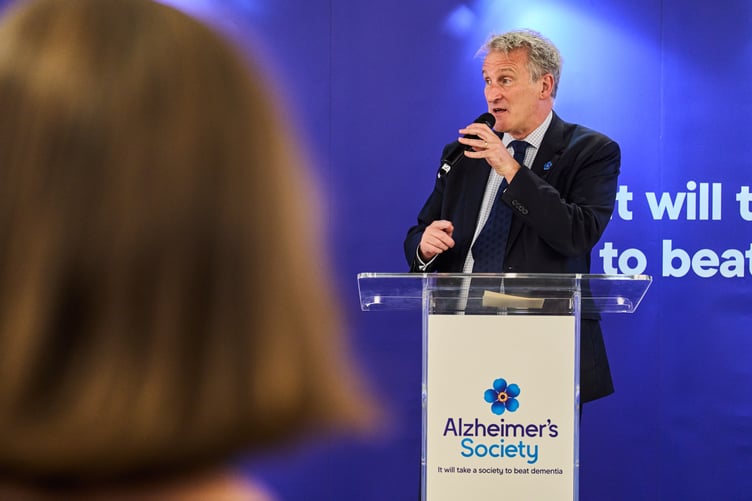
At the Alzheimer’s Society conference a couple of weeks ago, I spoke about these two great East Hampshire organisations and their extensive programmes for people living with dementia and their carers.
I also highlighted Alton’s fantastic town centre facility at the Assembly Rooms and Petersfield’s creation of an annual East Hants Festival event – a fantastic legacy of the inspirational late Jeff Williams. The use of the word ‘festival’ raised some eyebrows at the time, I recall. But what we were celebrating was the work of so many voluntary groups, alongside the NHS, supporting people living with dementia and their families.
There has been progress on diagnosis. A decade and a half ago, dementia diagnoses were much lower than they are today. Improving diagnosis became a national priority; rates subsequently rose. Now advanced technology using AI has the potential to accelerate that progress further. But there is still further to go.
In parallel, a programme was started to inform society better about what dementia is and how we can help people live well with the condition, through a short one-hour session. I found it immensely informative to become one of the (now) 3.9 million Dementia Friends. These days you can also do the session online – just search ‘Dementia Friends’.

We know that the social care system needs to be better joined up with the NHS, more preventative, and focused on helping people remain independent for longer. We await the Government’s new frailty and dementia framework (hopefully this will be published this year), which I hope will set out more on how this can be achieved. We also need more and larger clinical trials, and we need promising science to make its way from the lab to the patient as quickly as possible.
While we await further medical advances – and I am sure they will come – I pay tribute to all those giving their time locally to support people in our community living with dementia.
This year’s East Hampshire Dementia Festival is taking place at Churcher’s College, Petersfield, on October 30.
Comments
We've recently changed our login process. If you have an account for commenting, you will need to re-register on the login window.
This article has no comments yet. Be the first to leave a comment.