
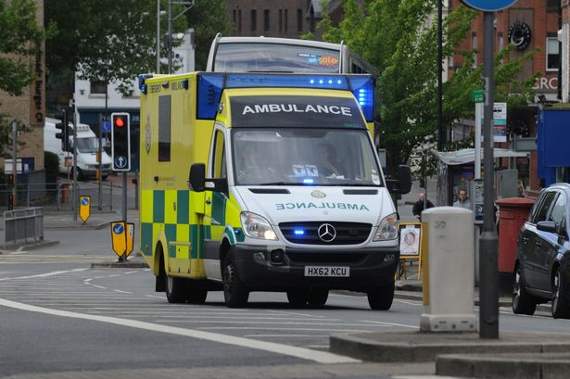
SOUTH Central Ambulance Service NHS Foundation Trust (SCAS) and the Isle of Wight NHS Trust have announced that they are seeking opportunities to collaborate in a number of common areas.
Opportunities to work together in 999, NHS 111 integrated care, and patient transport services, where both organisations share common challenges, will be the immediate focus of the work. Both organisations recognise that improving the quality and performance of services for patients while achieving greater value for money can be achieved through potentially sharing resources and best practice working.
Will Hancock, chief executive at SCAS, said: “As the Hampshire and Isle of Wight Health systems continue to further integrate and develop as part of the sustainability and transformation programme, it makes perfect sense to seek opportunities to work more closely together and identify ways to deliver excellent patient care and reduce cost.”
SCAS provides emergency care for Berkshire, Buckinghamshire, Hampshire and Oxfordshire - an area covering approximately 3,554 square miles with a resident population of more than four million people.




Maggie Oldham, chief executive officer, at Isle of Wight NHS Trust, said: “Our services work with a range of partners, including the police and fire and rescue service and volunteers from organisations such as coastguard, and already collaborate in a number of operational areas and we welcome opportunities to engage with stakeholders as we develop areas for further collaboration.”
A key area of immediate collaboration is the implementation of a new computer-aided dispatch system for the Isle of Wight NHS Trust ambulance service whose staff are currently visiting SCAS’ southern headquarters at Otterbourne, near Winchester, to be trained on the new system.
The island’s current computer-aided dispatch system has been in use for nine years and needs to be updated.
The new system will ensure that computer-aided dispatch will be ready to move over to the new Emergency Services Network when it goes live at the end of this year, provide economy of scale, improved software reliability, interoperability with the SCAS system to improve resilience with either system, and enable computer-aided dispatch to to report the new ambulance response programme standards.
Comments
This article has no comments yet. Be the first to leave a comment.