
AS people prepare to vote in a referendum on the town’s neighbourhood plan, the Alton Society is urging people to think about the implications of voting ‘no’.
Crucially, the neighbourhood plan is not about stopping houses being built but about giving people a say on where housing should go.
In a letter to the Alton Herald this week, Alton Society member Rod Eckles said: “For far too long Alton has suffered at the hands of unscrupulous developers, queuing up to build even more houses on greenfield sites, and with scant regard for the concerns of local people. But on February 24 (referendum day) we have a chance to stem the tide.”
And he is clear: “The neighbourhood plan referendum is a crucial opportunity for residents to say enough is enough.”

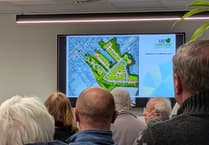


Alton’s neighbourhood plan has been developed in response to the Government’s requirement to allocate a significant number of homes across the country.
In Alton, this works out at 2,058 new homes between 2011-2028, of which 1,031 are already pre-allocated, leaving 1,027 on greenfield sites, and this is non-negotiable. What the plan has been able to decide, in consultation with residents and approved by Alton Town Council, is where these homes should go and, as such, six sites have been identified – Borovere Farm, Treloar, Cadnam Farm, and Will Hall Farm, with two smaller sites at Wilsom Road and Alton Convent School.
The neighbourhood plan also includes important policies for transport, health and community, education and economic sustainability, and viability.
In order to have appropriate legal standing, the plan has to be approved by a referendum before it can take effect.
If a ‘yes’ vote is recorded, it will establish the neighbourhood plan as a statutory planning document, for use by the local planning authority (East Hampshire District Council), securing the housing site allocations and enabling Alton Town Council to receive a financial contribution of 25 per cent from all developments under the community infrastructure levy arrangement. If, however, the public vote ‘no’, the town council will receive a capped 15 per cent community infrastructure levy contribution and EHDC will have to prepare its own housing allocation for Alton which will take time, during which developers could have an unrestricted field day.
In re-emphasising that voting for the neighbourhood plan is about giving people the chance to have a say over where new housing should go, Mr Eckles pointed out that was also about “imposing limits on the number, about constraining the ambitions of developers, and protecting Alton’s skyline from irreversible damage”.
While the planning system can be viewed as difficult and non-democratic, Mr Eckles believes the neighbourhood plan has been developed “by local people for local people in a clear and visible example of local democracy at work” and, in his opinion, to vote ‘yes’ on February 24 is a clear “no-brainer”.
While polling cards have been sent to Alton residents ahead of the referendum, the town council has prepared a ‘brief guide to the neighbourhood plan’ to give residents a factual overview of the full document and detailing the implications for Alton should the plan be approved or rejected.
The plan is availble online at alton.gov.uk while paper versions are available at the town hall and Alton library.
A final public information session will be held at Alton Assembly Rooms on Monday, February 22, from 3pm-8pm.
Comments
This article has no comments yet. Be the first to leave a comment.